It’s been another huge week in crypto, with markets reacting to macro pressure, whales making billion-dollar moves, regulators rewriting the rulebook, and the industry once again arguing about what it even stands for. From Bitcoin testing key resistance after the latest Federal Reserve meeting, to massive ETH accumulation, new U.S. regulatory guidance, stablecoin expansion, and fresh debate sparked by a controversial Vanity Fair feature, the past few days have shown just how quickly sentiment can shift in this space. One moment we’re talking about institutional adoption and global payments, the next we’re asking whether crypto is becoming the very system it was built to replace.
This week’s news highlights the strange reality of the current market cycle: prices may be volatile, but the industry itself has never been more active. Governments are moving toward formal regulation, major companies are building stablecoin infrastructure, large investors are still buying, and at the same time, the community is questioning its own identity. Whether this is the next stage of growth or just another chapter in crypto’s usual chaos depends on who you ask, but one thing hasn’t changed: this industry never stays quiet for long.
What's Happening On The Wayex Platform
Bitcoin Faces The Resistance
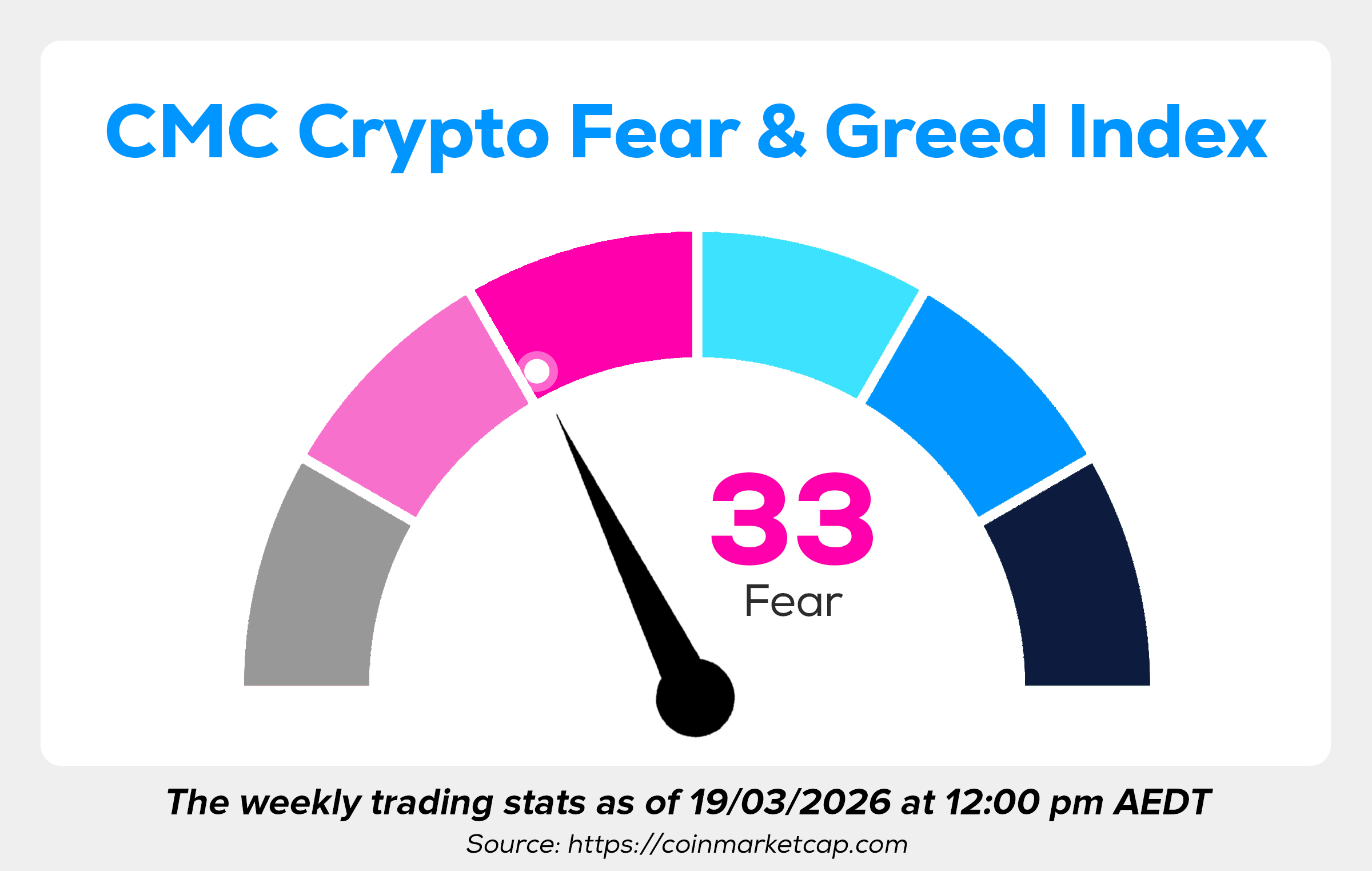
Bitcoin slipped below $71,000 (AU$100,765) after the latest Federal Reserve meeting, as Chair Jerome Powell warned that rising oil prices linked to the Iran conflict are pushing inflation expectations higher. The Fed lifted its 2026 inflation forecast to 2.7% from 2.4%, signalling that rate cuts may take longer than markets expected. The shift pressured risk assets across the board, with Bitcoin falling to around $70,900 (AU$100,725), ETH dropping about 6.5%, U.S. stocks closing at session lows, and gold slipping below US$4,850 ($AU check) per ounce as traders moved into risk-off positioning.
At the same time, analysis from CryptoQuant, reported by The Currency Analytics, shows Bitcoin facing strong resistance near US$75,000 (AU$106,442), with on-chain data pointing to increased selling from long-term holders and large investors. Another resistance zone is forming near $85,000 (AU$120,635), making the current range a critical test for market direction. Traders are watching volume closely, as a clean break above resistance could restart bullish momentum, while rejection at these levels may lead to further downside if macro uncertainty and Federal Reserve policy continue to weigh on sentiment.
Some analysts, including CoinPedia, have suggested the recent move may have been a dead cat bounce, but for now, the only certainty is that crypto never stays quiet for long.
ETH Had A Big Week; As Big Players Buy Across The Ecosystem
Institutional confidence in Ethereum continues to build, with BitMine Immersion Technologies buying another 60,999 ETH last week, worth nearly USD $140 million (AU$198 million), lifting its total holdings to about 4.59 million ETH, or roughly 3.81% of the circulating supply, as the firm moves toward its goal of owning 5% of all ETH.

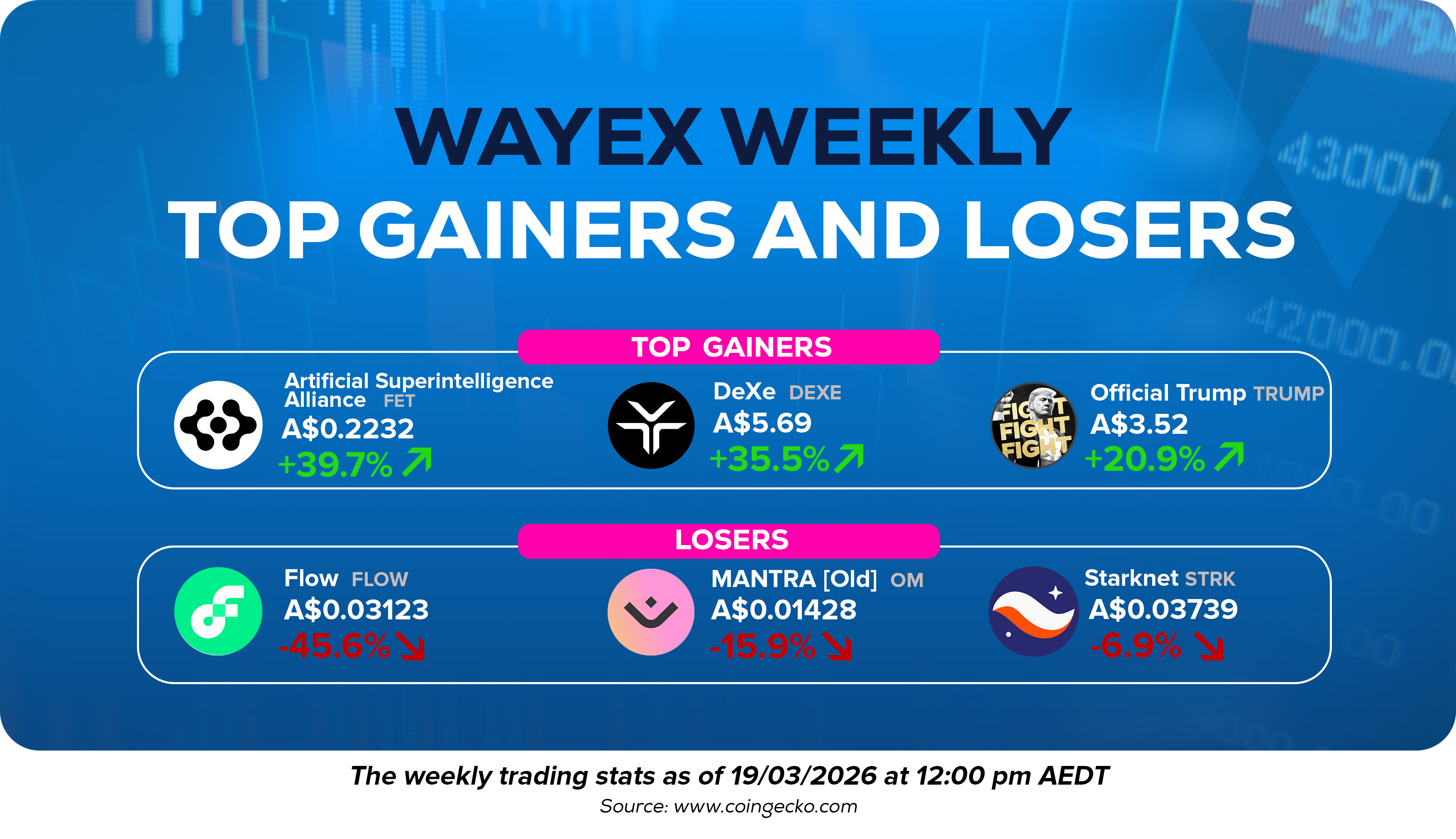
According to CoinGecko, ETH's price has increased by 7.1% over the last 7 days. On Tuesday, as reported by FX Street, Chairman Tom Lee said the company has accelerated purchases because the market may be nearing the end of a “mini-crypto winter”. However, since this commentary was published on Tuesday (AEDT), we are not willing to speculate whether he still holds this view.
However, ETH wasn’t the only token to see big whale movements: a large crypto whale moved US$500 million USDT (AU$709 million) to Binance. Michael Saylor of Strategy fame, not wanting to miss the fun, did what Strategy does: bought another 22,337 bitcoin for $1.57 billion (AU$2.2 billion) last week.
At the same time, the Ethereum Foundation has released a new 38-page mandate clarifying that its role is to act as a neutral steward focused on maintaining decentralised infrastructure rather than directing the ecosystem or building products. The document says the foundation’s job is to protect the protocol layer and support public goods while keeping Ethereum open-source, censorship-resistant, private, and secure, but the move has sparked debate across the community. In what can only be described as a completely shocking development, there is major disagreement about the foundational constitutional document, with supporters saying the approach reinforces Ethereum’s core principles, while critics argue the hands-off stance comes just as institutional interest in blockchain is growing and stronger coordination may be needed for Ethereum to compete with rival networks focused on real-world adoption.
How this will impact the pricing and both retail and institutional adoption, we can’t say.
The US Has Had A Big Week In Crypto
The U.S. had a huge week in crypto news, with the Federal Reserve meeting, new regulatory guidance, and updates on FTX repayments all landing at once. The biggest development came from regulators, with the Securities and Exchange Commission (SEC) and the Commodity Futures Trading Commission (CFTC) releasing new guidance introducing a formal taxonomy for digital assets. The framework classifies most cryptocurrencies as non-securities, dividing the market into digital commodities, digital collectibles, digital tools, stablecoins, and digital securities. Under the proposal, Bitcoin and Ethereum are treated as digital commodities, while NFTs and most utility tokens fall outside securities law, and activities such as staking, mining, airdrops, and wrapped assets are not automatically treated as regulated securities. SEC Chair Paul Atkins said the goal is to draw clear lines so the industry finally has a better understanding of how federal securities laws apply.
The update marks a clear shift from the previous SEC approach, which argued most tokens were securities and led to enforcement actions, delistings, and projects moving offshore. The Howey Test remains the legal standard, but the new framework allows a token to become a security if it is sold as an investment contract and to stop being one once the issuer's obligations are fulfilled. Stablecoins sit in the middle, with asset-backed versions likely outside the scope of securities law, while issuer-dependent or algorithmic designs may still fall under regulation. Atkins said the SEC is no longer the “securities and everything commission”, signalling a more industry-friendly stance, although he warned that permanent clarity will likely require new legislation from Congress as the U.S. continues to shape its long-term crypto rules.
And just because we haven’t had enough news out of the USA this week. It’s been announced that FTX plans to distribute about US$2.2 billion (AU3.1 billion) to creditors on 31 March 2026 as part of its Chapter 11 recovery process, with payments expected to be sent via BitGo, Kraken, or Payoneer to eligible claim holders who have completed KYC, tax, and onboarding requirements. In the same announcement, the company said preferred equity holders will have a record date of 30 April 2026, with the first payments scheduled for 29 May 2026, and distribution percentages will vary by claim class under the approved restructuring plan.
PayPal Opens PYUSD Across Multiple Markets
PayPal is expanding access to its U.S. dollar-backed stablecoin PYUSD to users in around 70 global markets, aiming to make cross-border payments faster, cheaper, and easier than traditional banking rails. The update allows customers to buy, hold, send, and receive PYUSD directly from their PayPal accounts, while businesses can settle payments in minutes instead of days, improving liquidity and reducing reliance on slow international transfer systems. The move reflects a broader push by major fintech and payment companies into stablecoins, with firms like SoFi launching their own dollar-backed tokens and Visa building infrastructure to support third-party stablecoin payments. As digital commerce grows, PayPal’s expansion shows how stablecoins are increasingly being positioned as a practical tool for global payments, even as the company faces pressure in the stock market and competition from both traditional finance and crypto-native platforms.
Australian Senate Backs New Crypto Rules
Australia’s push for clearer crypto regulation has advanced after a Senate committee recommended passing the Digital Assets Framework Bill, which would bring exchanges and custody providers under existing financial services laws. Reported by Crypto News Australia’s report, Jodi McDonald, the proposal would require crypto platforms to obtain an Australian Financial Services Licence (AFSL) within six months and introduce new compliance, disclosure, and asset-holding standards, giving ASIC stronger oversight of the sector. Supporters say the framework will improve consumer protection and provide long-needed regulatory clarity, while industry groups have warned that the rules rely heavily on traditional financial licensing models that may not cleanly fit digital assets. If passed, the bill would mark one of the most significant steps yet toward formal crypto regulation in Australia, signalling a shift from light-touch oversight to full integration with the financial system.
Things That Made Us Laugh This Week


Founder's Corner
This week’s shift from crypto’s "Wild West" origins towards an institutional future is clear: Bitcoin’s dip below AU$100,765 (US$71,000) is merely macro noise compared to the massive AU$2.4 billion in combined accumulation by whales like Michael Saylor and BitMine. With the US SEC and CFTC finally introducing a formal taxonomy and PayPal scaling PYUSD to 70 markets, the "utility war" is being won by those who embrace structure. The era of operating in regulatory grey areas is ending, replaced by a global standard where transparency and licensing are the only paths to long-term survival.
At Wayex, we aren't just reacting to these changes; we have positioned ourselves ahead of the curve. As the Australian Senate moves to mandate AFSL requirements through the Digital Assets Framework Bill, Wayex is already operating with the rigorous compliance and consumer protections that others are only now scrambling to implement. We recognised early on that the industry was heading towards full integration with the traditional financial system, which is why our infrastructure, from NPP/PayID instant settlements to our Visa Card, is built to exceed tomorrow's standards. While the rest of the market waits for the rules to be finalised, Wayex is already providing the secure, regulated gateway that defines the next phase of global finance.
Richard Voice, Co-Founder, Wayex
**All information in this article is for informational purposes only. You should not construe any such information or other material as legal, tax, investment, financial, or other advice. Nothing contained herein shall constitute a solicitation, recommendation, endorsement, or offer by Wayex to invest, buy, or sell any coins, tokens, or other crypto assets. Any descriptions of Wayex products or features are merely for illustrative purposes. Past performance is not a guarantee or predictor of future performance. The value of crypto assets can increase or decrease, and you could lose all or a substantial amount of your purchase price. It is essential for you to do your research and due diligence to make the best possible judgement, as any purchases shall be your sole responsibility.