.png)
This week in crypto, the market is stuck between uncertainty and acceleration. Bitcoin is holding near US$72,000(AU$103,602) while traders build leveraged positions and wait for a breakout, but the bigger story is happening under the surface. Regulation is moving forward, stablecoin rules are being negotiated, tokenisation is gaining support from central banks and Wall Street, and institutional buyers continue to accumulate, even as parts of the old DeFi cycle shut down. The result is a market that feels volatile in the short term but increasingly structured in the long term.
Across the industry, the themes are clear. Governments are debating how to control stablecoins without slowing adoption, major funds and corporates are still buying Bitcoin and Ether, and traditional finance is pushing toward tokenised markets that run on blockchain rails. At the same time, some projects from the last cycle are being forced to restructure or close, indicating that the gap between speculation and real infrastructure is widening. While price action remains choppy, the industry's direction is becoming clearer, with crypto moving closer to regulated global finance rather than the wild west it once was.
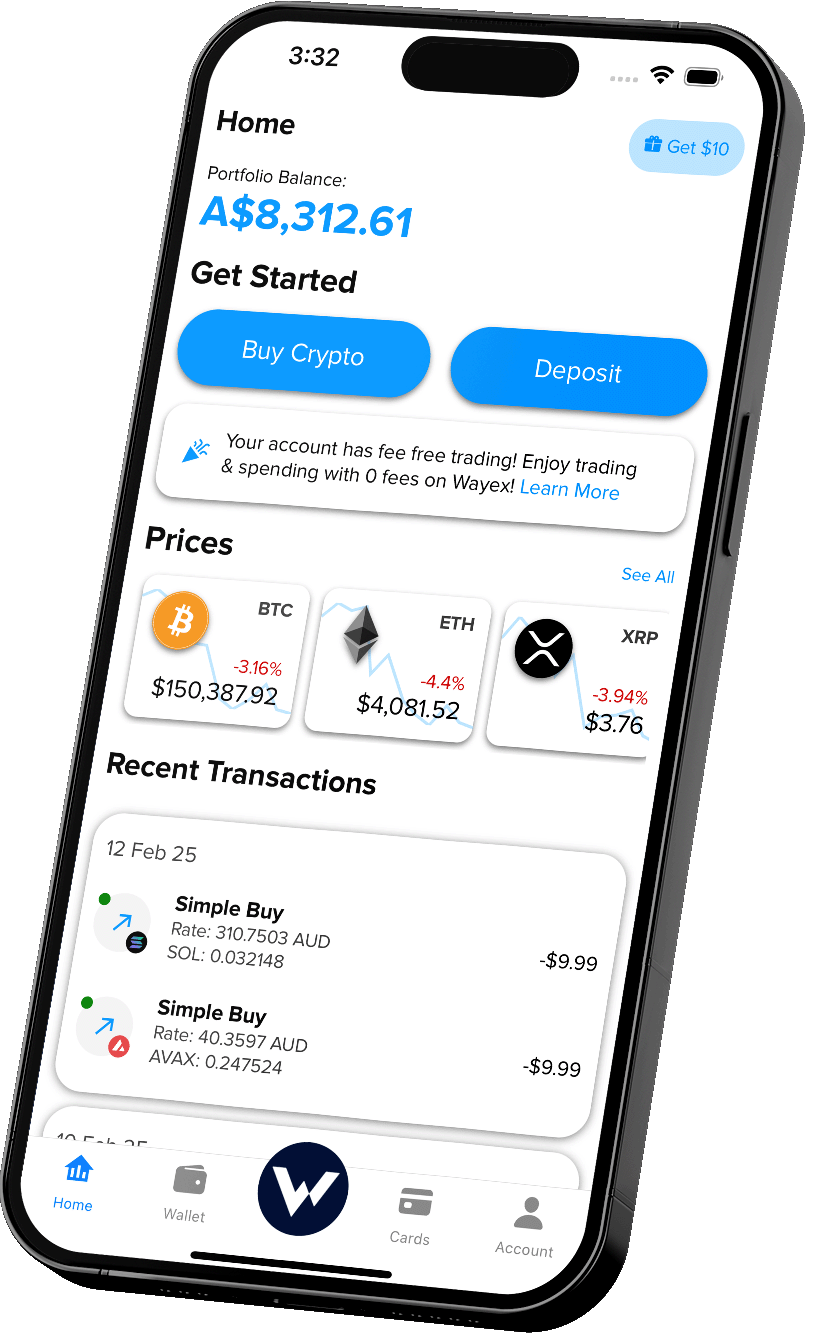
What’s Happening On The Wayex Platform

.jpg)
Bitcoin Hovers At US$72,000 (AU$103,602)
Bitcoin is pushing back toward the US$72,000 (AU$103,602) level, but the move is happening in a choppy market where traders are building more leveraged positions rather than spot demand leading the rally. Futures open interest has climbed to around US$112 billion (AU$161 billion), showing that more capital is entering derivatives, while repeated rejections near US$72,000 (AU$103,602) have encouraged short positions to build in that range. At the same time, BTC continues to track equities closely, rising alongside stock futures after oil prices pulled back, suggesting macro headlines are still driving sentiment even as crypto remains relatively strong compared with traditional safe-haven assets.
Positioning across the market shows traders are becoming more aggressive, with Ether open interest hitting multi-month highs and several DeFi and AI tokens outperforming Bitcoin. CoinDesk reports that falling volatility and weaker downside hedging suggest investors are less worried about geopolitical risk, even though uncertainty remains. Options pricing points to US$75,000 (AU$108,014) as the next key level, with upcoming expiry flows potentially pulling the price higher if momentum holds. Overall, the market looks poised to build pressure for a bigger move, but the heavy use of leverage means sharp swings could follow any breakout in either direction.
The Clarity Compromise Was Here?
The long-running stalemate over the CLARITY Act, the most comprehensive crypto bill currently moving through the US Congress, appeared to be finally breaking yesterday after lawmakers reached a compromise on stablecoin yield rules. The debate has centred on whether stablecoins should be allowed to pay interest, with banks arguing that yield-bearing tokens should be treated like deposits. At the same time, crypto firms pushed to keep rewards part of the on-chain infrastructure. The latest draft draws a clear line, banning rewards for simply holding a stablecoin and restricting anything considered economically equivalent to interest, while still allowing activity-based rewards linked to trading, lending, transactions, loyalty programs, or platform use. Markets reacted quickly, with stablecoin-exposed stocks such as Circle falling after the proposal raised the risk of tighter limits on yield products. Still, the compromise was seen as progress after months of deadlock, and many expected the bill to move toward markup before the Easter break.
Today, that momentum already looks less certain. The politics around the bill continue to shift, with reports that Coinbase, one of the most active companies lobbying for the CLARITY Act, may again be stepping back from the latest version after previously withdrawing support during earlier drafts. The company had earlier opposed the bill, then returned to back the revised markup after negotiations, but the newest language on stablecoin rewards appears to have reopened industry concerns.

Coinbase is not alone; parts of the crypto community are also criticising the proposal as too restrictive, and the sudden change in sentiment has cast doubt on the timeline that looked close to resolution only yesterday. The bill was expected to move forward this month. Still, with positions changing almost daily, the path to final approval now looks uncertain again, showing how quickly US crypto regulation can swing from progress to gridlock.
Tether Commits To An Audit
Tether is moving closer to its first full independent audit of USDT reserves, a step that could mark one of the biggest transparency shifts in stablecoin history. The company has engaged a Big Four accounting firm to carry out the audit, which would go further than the quarterly attestations it has relied on in the past by reviewing assets, liabilities, internal controls, and risk exposure over time. The push for a full audit comes amid growing pressure from regulators and institutional investors, especially after years of criticism over reserve disclosures and earlier failed audit attempts, as reported in detail by CoinGeek. With USDT’s market cap now above US$180 billion (AU$260 billion), the stablecoin has become core infrastructure for trading and global payments, making stronger oversight increasingly unavoidable.
The audit is also holding up a massive fundraising plan that could value Tether at around US$500 billion (AU$720 million), as investors want clearer financial reporting before committing capital. According to the Financial Times, the company has paused plans to raise to US$20 billion (AU$29 billion). At the same time, the audit is completed, with potential backers pushing for greater transparency around reserves and governance. Despite the delay, demand for stablecoins continues to grow, with USDT dominating the market and backed by large holdings of US Treasury bills. If the audit is completed successfully, it could set a new standard for the industry and help bring more institutional money into stablecoins, payments, and tokenised finance as crypto moves closer to traditional financial rules.
Hong Kong Licensing Deadline Approaches
The global stablecoin debate is heating up as more countries realise that using dollar-backed tokens may strengthen the very system they are trying to move away from. A recent debate published by the South China Morning Post highlighted how the GENIUS Act could reshape the market, with about 99% of the roughly US$300 billion (AU$432 billion) stablecoin sector already tied to the US dollar. Supporters argue the new rules open the door for institutional adoption. Still, critics say the result could be even stronger US dollar dominance, especially as stablecoins become a core tool for global payments, trading, and settlement.
The real demand for stablecoins is coming from outside the United States, particularly in countries with weaker currencies such as Turkey, Nigeria, and Argentina, where people use dollar stablecoins to store value, send remittances, and avoid expensive banking rails. In our current reality, which involves checking the news to see what happened while we slept,
Hong Kong is now being watched as a key test case as regulators prepare to issue their first stablecoin licences, likely favouring bank-led issuers to keep tighter control over the system. Even so, the city’s currency peg to the US dollar means any local stablecoin will remain linked to the US financial system, highlighting the dilemma facing many economies as stablecoins grow. They solve real problems for global payments, but each step forward also makes the US dollar’s role in crypto even stronger.
Whales, Wall Street, Keep Buying Up Supply While Big Shutdowns Occur
Strategy, led by Michael Saylor, is changing how it funds its Bitcoin buying, relying less on issuing new shares and more on alternative financing to keep accumulating BTC. Recent data show the company bought tens of thousands of Bitcoin over two weeks in March, while on-chain signals suggest the move back toward the mid-US$70,000 (AU$100,835) range is being driven by spot demand, rising ETF inflows, and easing selling pressure on major exchanges. Institutional buying is also spreading beyond Bitcoin, with Bitmine purchasing about US$139 million (AU$200 million) in Ether as part of a long-term treasury strategy. At the same time, industry leaders say tokenisation, stablecoins, and AI-driven transactions could shape the next phase of adoption. These trends suggest large players are still building positions even as the market remains uncertain
That uncertainty is still visible across parts of the industry, with DeFi protocol Balancer shutting down its corporate entity after a US$110 million (AU$158 million) exploit and years of declining activity. The project's total value locked has fallen about 95% from its 2021 peak, forcing a major restructuring as the team moves to keep the protocol alive in a smaller form. For crypto-native traders, the contrast is clear. While some older DeFi projects struggle after the last cycle, institutions and large treasuries continue to accumulate assets and invest in new infrastructure, indicating the market is shifting from speculation toward longer-term building.
Hostplus Talking Crypto
The Block reports that Hostplus is exploring allowing its members to invest in bitcoin and other digital assets through its self-directed investment option, Choiceplus. The fund manages approximately $150 billion (AU$216 billion) in assets and serves nearly two million members, with an average age in the mid-to-late 30s. Chief Investment Officer Sam Sicilia confirmed to Bloomberg that crypto offerings could be introduced as early as next financial year, subject to regulatory approval. Sicilia noted that the fund has received consistent requests from members seeking access to cryptocurrency, suggesting that Hostplus is now taking those calls seriously.
This development is significant for the Australian crypto community, particularly given the local superannuation industry's caution toward digital assets. While the United States has moved more aggressively in this space, with President Trump signing an executive order last August permitting 401(k) plans to include crypto, it has joined other countries, such as the UK and Canada, in allowing institutional investment in cryptocurrency. Despite these movements and larger economies in this space, Australia has largely remained on the sidelines. The only notable local move came from AMP, which gained indirect exposure through bitcoin futures in 2024. Should Hostplus proceed, it could provide millions of everyday Australians with their first opportunity to access crypto directly through their superannuation, representing a landmark moment for the digital assets industry in Australia.
Everyone’s Talking Tokens
Europe is accelerating its push into tokenised finance as the European Central Bank prepares to launch a new blockchain bridge called Pontes, designed to connect fragmented networks used for tokenised assets across the region. Regulators are concerned that without a unified system, private stablecoins, especially US dollar-backed tokens, could become the default settlement asset for European markets. The ECB wants tokenised trades to settle using central bank money instead, arguing this reduces risk and helps maintain monetary control as tokenisation moves from testing into real-world use. The Pontes bridge, expected to go live in 2026 as part of the wider Appia roadmap, is intended to link existing blockchain rails and prepare Europe for a fully tokenised capital market as the EU tries to keep pace with US dominance in stablecoins and on-chain finance.
At the same time, major institutions are pushing tokenisation forward, with BlackRock CEO Larry Fink saying blockchain could make investing as easy as sending a payment from a phone. He noted that billions of people already have digital wallets, and tokenising assets such as stocks and bonds could enable faster issuance, trading, and settlement while expanding access to more investors. His comments come as regulators and exchanges explore tokenised securities and on-chain settlement, showing that traditional finance is moving quickly toward blockchain-based markets. Together, these developments highlight a global race to build infrastructure for tokenised capital markets, with governments seeking to preserve monetary control. At the same time, large financial firms push for faster, more accessible systems.
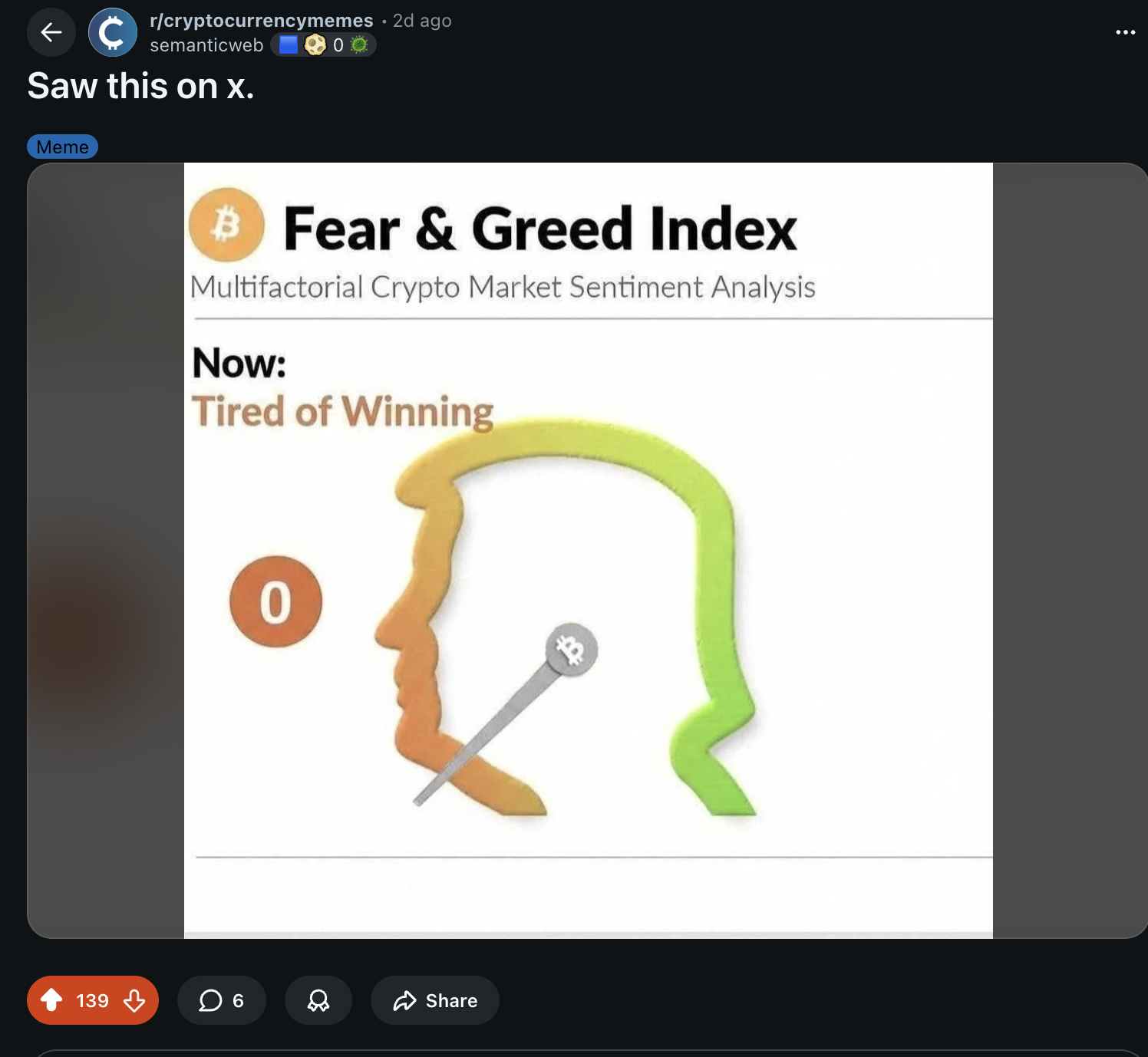
What Made Us Laugh This Week


Founder's Corner
The crypto market this week reflects a broader shift we've been watching closely at Wayex. The gap between speculation and real infrastructure is widening, and the direction of travel is becoming harder to ignore. Bitcoin is holding near US$72,000 (AU$103,620), but the more important story isn't the price. It's the behaviour underneath it. Institutional buyers are still accumulating, large treasuries are continuing to build positions in both Bitcoin and Ether, and projects that couldn't survive the last cycle are restructuring or closing. This isn't the frantic retail-driven momentum of previous cycles. It's a slower, more deliberate form of conviction from players who are thinking in years, not weeks.
At the same time, regulation is moving from debate to implementation. The CLARITY Act is inching forward, stablecoin rules are being actively negotiated, Tether is moving toward its first full independent audit, and the ECB is building blockchain infrastructure to keep tokenised markets settled in central bank money. These aren't fringe conversations anymore. Governments and central banks are designing the financial plumbing of the next decade, and blockchain is at the centre of it. For Australians specifically, the news that Hostplus is exploring crypto access through superannuation is a landmark signal that digital assets are entering the mainstream financial conversation here at home.
**All information in this article is for informational purposes only. You should not construe any such information or other material as legal, tax, investment, financial, or other advice. Nothing contained herein shall constitute a solicitation, recommendation, endorsement, or offer by Wayex to invest, buy, or sell any coins, tokens, or other crypto assets. Any descriptions of Wayex products or features are merely for illustrative purposes. Past performance is not a guarantee or predictor of future performance. The value of crypto assets can increase or decrease, and you could lose all or a substantial amount of your purchase price. It is essential for you to do your research and due diligence to make the best possible judgement, as any purchases shall be your sole responsibility.